
s

Earthmade Foods

While winter settles in, farmers know that December is full of essential work. From caring for winter crops to protecting the land, this month is about resilience, and resilience begins underground. Here’s how Earthmade encourages growers to make the most of the final month of the year.

Grow in the Chill: Cool-Weather Champions

Cool-season vegetables don’t just survive December, they love it. For growers in mild and moderate climates, this is prime time for:

  • Leafy greens (kale, chard, spinach)
  • Brassicas (broccoli rabe, collards)
  • Root crops (carrots, beets, radishes)

These crops thrive in cold soil when biological activity remains steady. Earthmade’s biological soil solutions can help maintain nutrient cycling even when temperatures drop.

Mulch, Cover, and Conserve

Soil conservation is one of the most important winter tasks. December priorities include:

  • Laying mulch to insulate the soil
  • Adding compost to replenish organic matter
  • Protecting roots with straw and winter blankets
  • Planting cover crops to prevent erosion and feed soil microbes

Healthy winter soil means stronger spring crops with fewer inputs and less environmental impact.

Winterize Irrigation & Infrastructure

Frozen equipment can mean expensive repairs and lost growing days. Earthmade recommends:

  • Draining and storing hoses
  • Insulating exposed pipes
  • Clearing irrigation lines
  • Fixing greenhouse tears or loose plastic before storms roll in

Strong infrastructure protects both crops and soil, reducing unnecessary waste.

Support Your Livestock Through the Cold

For mixed farms, December means:

  • Ensuring fresh, unfrozen water
  • Providing high-quality feed to maintain body heat
  • Managing bedding for warmth
  • Checking shelters for drafts and moisture

Healthy animals are part of a healthy ecosystem, and winter care keeps the whole farm balanced.

Plan with the Soil in Mind

December is the planning season. Earthmade encourages growers to:

  • Review crop rotations that improve soil structure
  • Analyze soil test data to understand winter needs
  • Set goals for reducing on-farm waste
  • Choose regenerative strategies for spring planting

Planning through the lens of soil health supports higher yields, stronger plants, and reduced environmental impact.

Winter farming is less about slowing down and more about strengthening what matters most – the soil. Earthmade is here to help farmers regenerate their land, reduce waste, and move into the new year with confidence and clarity.

Show Your Support

Be our cheerleader! There are multiple ways you can support Earthmade, even if you aren’t a farmer or industry professional. Help us out by socializing online, downloading information, and getting the word out! Everyone can benefit from Earthmade, and can do something that is 100% Good for the earth!

Become a Partner

We are always looking for partnerships, industry professionals, educators, scientists, and distributors to help us make a difference! Get in touch if you are interested in helping us spread our mission and showing your support for better food, better health, and a better earth.

Become an Earthmade Farmer

Earthmade empowers our farmers, because they are our food champions! Join our coalition of farmers to help improve communities, the environment, and our future for generations to come- to truly Farm it Forward ™.

Refer a Farmer

It is Earthmade’s goal to form a strong global connection of farmers, and to find partners that share our vision of making a difference across the globe in sustainability. If you know someone that can help us fulfill our mission, refer them to us!

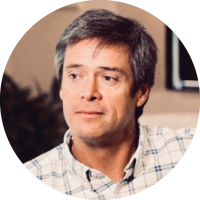
Earthmade_Website_MikeDobbins

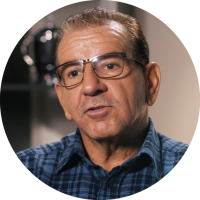
Mike Dobbins

CEO, Vicentia

Mike Dobbins is developing bio inputs to replace pesticides, herbicides and chemical fertilizers. His mission is to give farmers the tools they need to produce 100% chemical free food at the scale needed to feed the 9.8 billion people that will soon inhabit the earth. “If you want to look after biodiversity, and you want to improve our soil health, and you want to improve our chronic illness growth, we have to have NO chemicals. And in all fairness there has not been, on a worldwide basis, a solution to the problem.

 
Earthmade_Website_WalmartLogo

Walmart

A few years ago, Walmart embarked on a journey to become a regenerative company, dedicated to placing nature and humanity at the center of their business. As part of their commitment, they recently partnered with GEM Pack Berries, and will be distributing the first crops ever to be grown using an innovative cultivation method that eliminates the need for pesticides and soil-damaging heavy metals… game-changing strawberries from Earthmade. In keeping with environmentally friendly practices aimed at minimizing transportation distances, Earthmade strawberries are available in select Walmart locations in Southern California’s Ventura County.
Earthmade_Website_Duda

Duda Farm Fresh Foods

The Duda family has been growing fresh fruits and vegetables for nearly 100 years. It all started with Andrew Duda, who had just 40 acres of farmland, and his sights set on the American Dream. Now, six generations later, the Duda family continues this legacy by bringing their farm-fresh products to a restaurant or grocery store near you and ultimately, your kitchen table. Among their responsible farming practices, Duda has graciously partnered with Earthmade in running chemical-free farming trials on celery.
Earthmade_Website_GathFarms

Gath Farms

Gath Farms has a strong foundation of four generations dedicated to the land. They base their business on relationships, and understand the importance of face-to-face business practices built on honesty and integrity. Working together to build and grow their own successful farming operation provides the foundation upon which they can help others grow their operations, increase their profits and protect the land for generations to come. Gath Farms has partnered with Earthmade to run trials of chemical-free farming on commodities such as corn and soybeans.
GEM-Pack-logo

GEM Pack Berries

With an eye on the future, an ace coalition of California farmers known as GEM Pack Berries long ago embraced the organic farming practices standardized in the late 1980s. When they banded together in 2015, they wanted to find even more sustainable, soil friendly methods. They soon partnered with Vicentia, which was conducting innovative research on developing a special kind of good bacteria as a substitute to both artificial and heavy metal-based pesticides. GEM Pack understood that, if Vicentia scientists were successful, their advancements could solve a long list of health, agricultural, sustainability, and environmental issues. GEM Pack allocated a sizable plot of farming land so Vicentia bioscientists could conduct multi-year research on the cultivation of multiple commodities.
Earthmade_Website_Vicentia

Vicentia

Australian bioscience company Vicentia’s bio inputs have not only protected crops all around the world from pests that prey on them; they also eliminated the need for heavy metals, which have been found to affect the biofertility of the soil. Better yet, these revolutionary innovations could be adopted by farmers everywhere to grow all varieties of crops, thereby potentially transforming currently problematic farming practices into healthy, earth regenerating, sustainable practices. Vicentia’s groundbreaking solution also lowered production costs while maintaining or increasing yield and crop quality. Today, Vicentia’s regenerative agricultural advances are being trialed in seven countries.
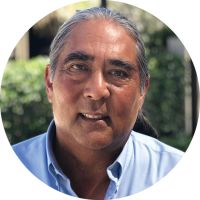
Earthmade_Website_HowardShapiro

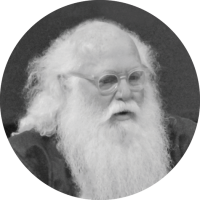
Howard Shapiro

Professor

Howard Shapiro has made it his life mission to understand the health of our plant. He has been involved with sustainable agricultural and agroforestry systems, pattern recognition, plant breeding, molecular biology and genetics for over 40 years. He has worked with indigenous communities, NGO’s, governmental agencies and the private sector around the world. A former university professor for 15 years, Fulbright Scholar, Ford Foundation Fellow, Fellow of the World Agroforestry Center, Chairperson of the External Advisory Board of the Agriculture Sustainability Institute at UC Davis, and numerous additional accolades, Shapiro has certainly proved he has the experience and vast knowledge of the very critical status of the world’s agricultural crisis.
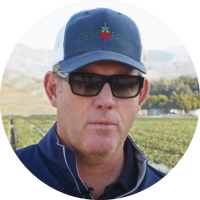
mark gath

Mark Gath

Owner, Gath Farms

Mark Gath is the owner of Gath Farms, and comes from a multi-generational line of mid-western farmers and growers. As a cancer survivor (brought on by years of chemical-reliant farming), Gath has been a champion of non-chemical farming and agriculture practices. He enthusiastically grows chemical-free corn on his Arizona farm, andis running chemical-free trials of soybeans on his mid-west farms.
Earthmade_Website_CarlosMeza

Carlos Meza

Bioscientist, Vicentia Farmer

Carlos is an organic farmer and bioscientist hailing from Chile, where he was one of the first certified organic exporters in the 1990s. Disturbed by the amount of chemicals that are still widely used in certified organic systems, he’s developing fully biological alternatives to chemical pesticides and herbicides. These bio inputs harness the power of naturally occurring microbes to naturally control pests. Carlos’ vision is to remove all chemicals and heavy metals from conventional and organic farming systems.
Earthmade_Website_AGKawamura

A.G. Kawamura

Owner, Orange County Produce, LLC

A.G. Kawamura is the former Secretary of the California Department of Food and Agriculture. He is a third generation fruit and vegetable grower from Orange County. He is co-chair of Solutions From the Land, a non-profit organization that collaborates with farmers, ranchers, foresters and stakeholders to implement climate smart land management practices and strategies.
Earthmade_Website_MikeEtchandy

Mike Etchandy

Owner, Etchandy Farms Co-Owner, GEM-Pack Berries

Mike Etchandy is a fourth generation organic and conventional Orange County strawberry farmer. Jaded by the ambiguous organic certification system and the heavy metals it relies on, he has been testing new bio inputs on his strawberry fields to reduce his dependence on harmful chemicals.